Evaluating Institutional Dog Daycare Programs for Professional Pet Care Standards
Marion County Now reports that NCCC has introduced a doggy daycare program framed around responsibility and trust-building.
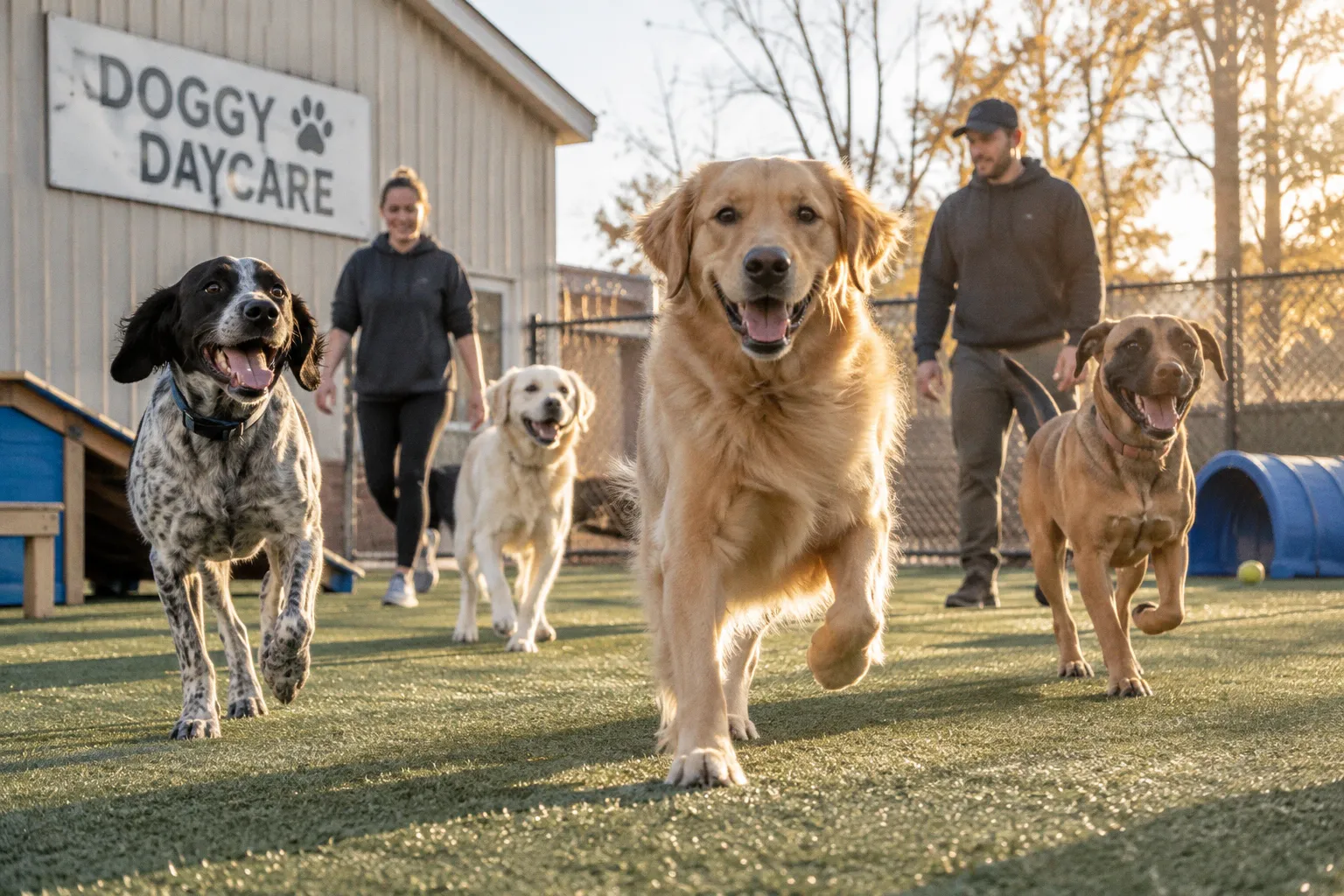
The announcement, as published, offers limited operational detail — sufficient for a directional signal, insufficient for direct professional assessment.
The independently confirmed dataset is narrow: the institution is NCCC, the source is Marion County Now, the program type is doggy daycare, and the stated focus is responsibility and trust. Everything below operates as an evaluation framework, not as a claim about this specific program's quality.
What the framing implies for operators
"Responsibility and trust" in a daycare context typically translates to supervised handling routines, shift accountability, and predictable handler-to-dog workflows. For professional walking and sitting services, this signals an entry-level handler pool potentially trained in baseline group management. Whether that baseline meets industry safety norms remains undisclosed in the current reporting.
Verification checklist before any referral or partnership
When any institutional daycare surfaces in your service area, request documentation on the following parameters before sending a client, accepting a referral, or hiring a graduate:
1. Vaccination policy. Written requirement for rabies, DHPP, bordetella, and canine influenza. Proof collected, dated, and stored per dog.
2. Handler-to-dog ratio. Posted, signed, and enforced. Industry baseline runs 1 handler per 10–15 dogs, reduced for small-breed or high-arousal groups.
3. Incident logging. Every bite, scratch, scuffle, and near-miss recorded with timestamp, dogs involved, handler response, and outcome.
4. Veterinary access. On-call or on-site veterinarian identified by name. Nearest emergency clinic address and transport plan documented.
5. Environmental controls. Shade, water stations, rest cycles, and ambient temperature ceilings for outdoor time. Surface materials and drainage specified.
6. Behavioral screening. Intake temperament test documented. Exclusion criteria for reactive or undersocialized dogs published.
7. Group composition logic. Separation by size, age, and play style. Grouping decisions traceable to a written protocol, not staff judgment.
Absence of any item is not disqualifying — early-stage programs frequently publish without full operational disclosure. Each gap, however, is a question to put in writing before engagement.
What to monitor
Watch for follow-up reporting from Marion County Now on staffing ratios, facility specifications, and veterinary oversight. These three parameters convert a directional announcement into an operational model that can be measured against your own safety standards. Until then, the program registers as a community-level training signal — not yet a validated referral source.