Why Professional Pet Sitters Must Prioritize Vehicle Safety Restraints
A recent survey from Volvo Car USA surfaces a gap most professional sitters and dog walkers have already seen from the front seat: dog owners love car rides with their pets, but the restraint piece is widely skipped. The figures land at 93% of U.S.
Why pet transport belongs in your service checklist
dog owners driving with their dogs and 61% of that group using no safety restraint at all, with 73% admitting their dog has pulled their attention away from the road. For anyone running daily transport as part of a sitting or walking routine, that number isn't a curiosity — it's the baseline your own protocol needs to clear.
The poll, run by YouGov with 2,477 U.S. adults (1,068 of them dog owners) between July 8 and 10, was timed to Dogust, the August 1 observance that gives a shared birthday to rescue and shelter dogs whose actual birth date is unknown. Volvo paired the release with a reminder that a loose dog in the cabin isn't just a comfort preference; it's a distraction pattern. In a sudden stop, an unrestrained dog can become a projectile, sustain injuries that aren't visible right away, or panic and bolt once a door opens.
Build a transport kit that matches your vehicle
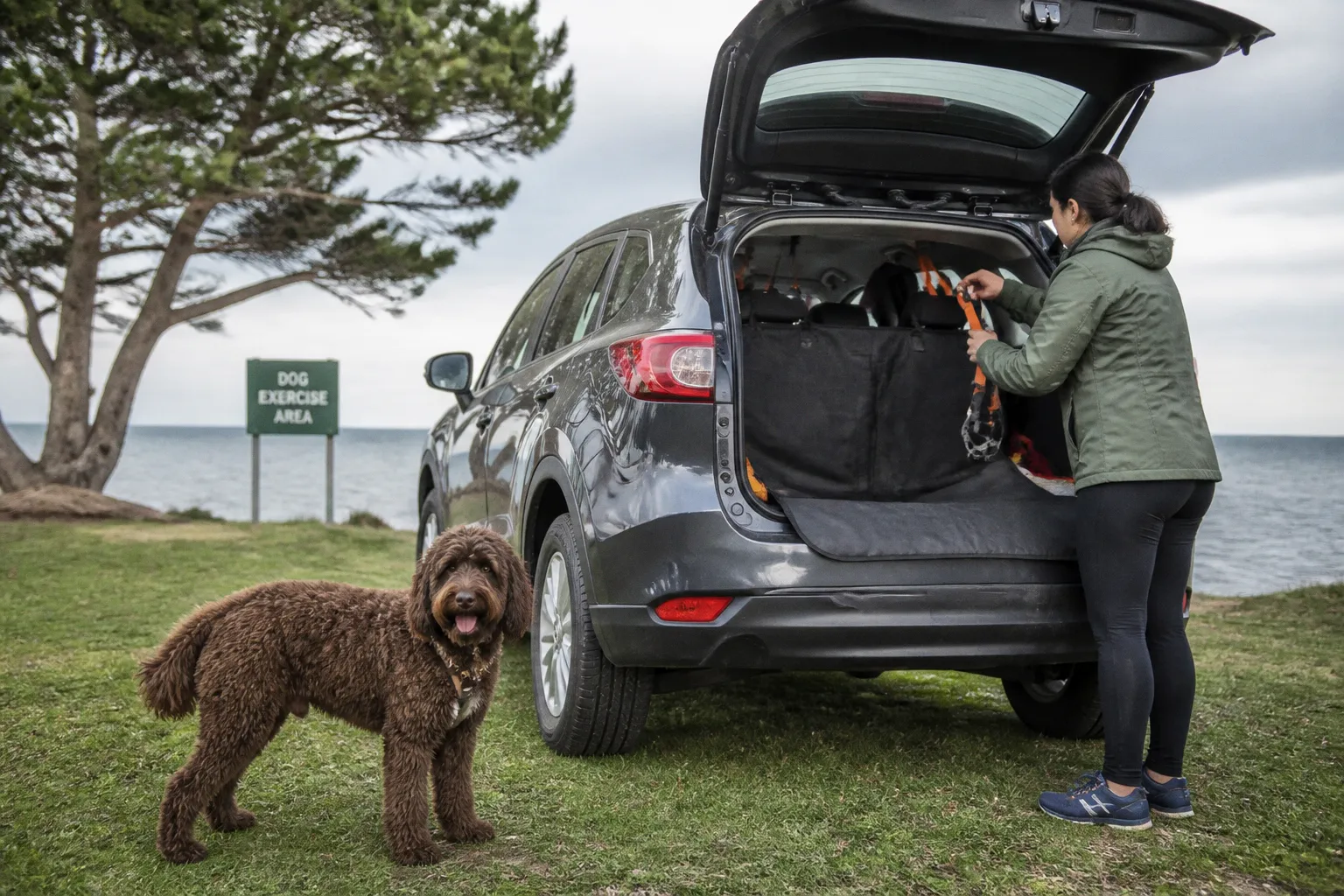
Standardizing restraint is the single move that turns this from a personal habit into a regulated part of your service. Volvo highlights three accessory shapes that map neatly onto the vehicles most sitters actually drive: a secured dog cage for sedan-style back seats, a cargo-area dog gate for SUVs and hatchbacks, and a crash-tested dog harness for shared-cabin travel with a passenger. Pick one restraint layout per vehicle and run it every time, rather than improvising by client or by mood.
Dr. Nicole Fein, a veterinarian and board-certified small animal internal medicine specialist quoted in the release, frames the clinical view simply: a routine car ride can shift into a stressful emergency quickly when a pet isn't properly secured. Translated into the logistics of a sitting business, that means a five-second harness click at pickup is the difference between a calm drop-off and an after-hours call you'd rather not field.
Anchor the routine at client handoff
The transition phase from a dog's home to your vehicle is where protocols either hold or quietly fall apart. Two familiarity anchors keep the system intact across clients. First, ask at intake whether the dog has ridden in a car before and what restraint the household used; introducing a crate or harness on day one stacks stress on top of an unfamiliar person, and that combination is what usually gets blamed on the sitter rather than the setup. Second, record the chosen restraint in your service notes so the next walker or walker-in-training inherits the same method instead of starting fresh.
The reassuring summary is short. One restraint style per vehicle, a five-second client conversation at handoff, and a written record every visit. That's the protocol the survey is asking for, and it's the one that keeps the dog, the client, and your business on the road the way they should be.