Using Dog Festivals to Evaluate Canine Behaviour and Training Gaps
BBC reports that dogs and their owners gathered at Kirkley Hall in Northumberland for the North East Dog Festival, an event built around training, sports, activities, and competitions.
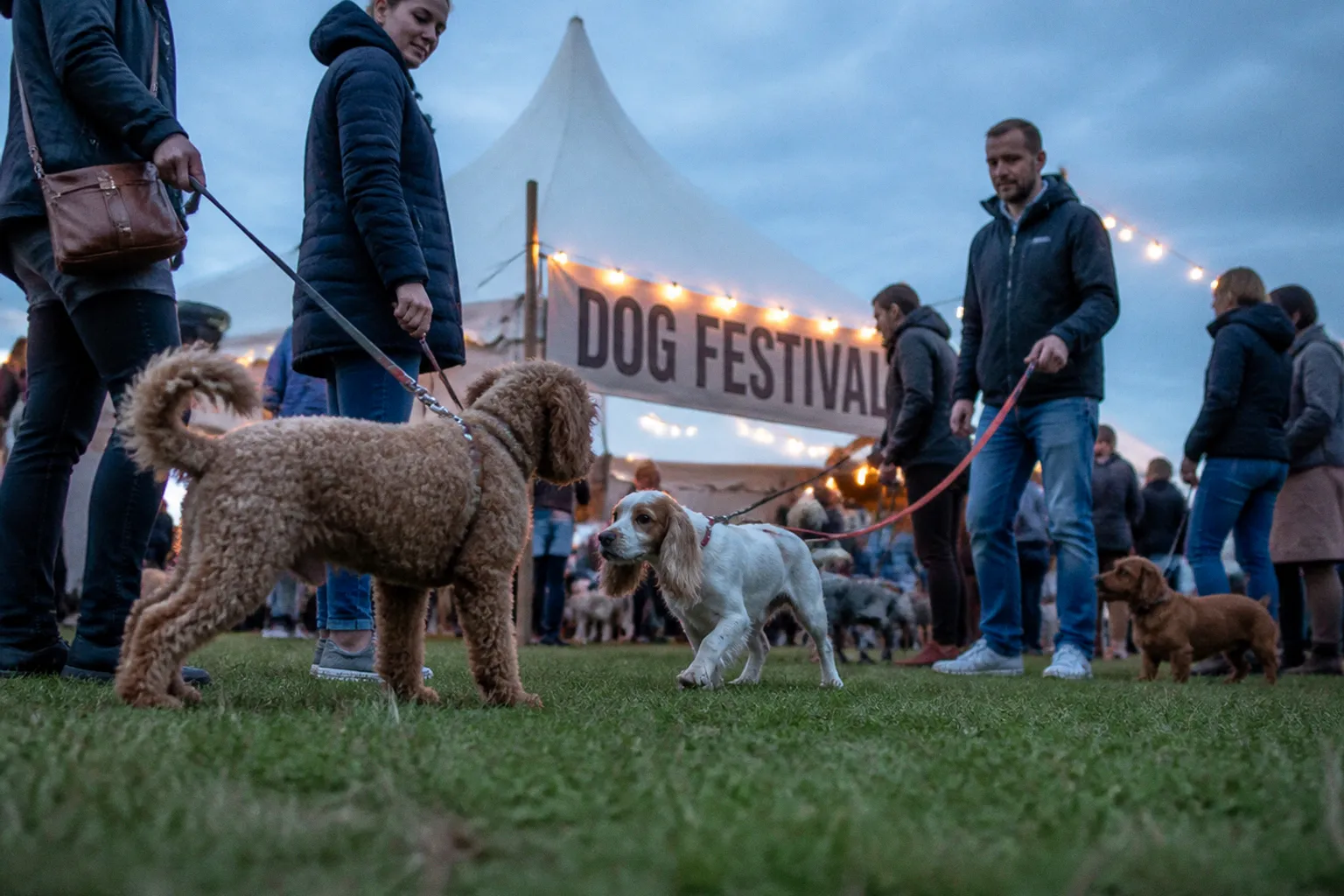
The practical relevance for walkers and sitters is clear: controlled novelty can expose gaps in a dog’s recall, lead handling, social response, and engagement. Those gaps should be identified before a busy group activity, not during one.
Treat the event as a gait-and-behaviour assessment
The festival took place in the grounds of Kirkley Hall, a Grade-II listed stately home dating back to the 1600s. Owners were invited to try activities with their dogs, including exercise classes, tricks, training, sports, and competitions.
For a professional dog walker or sitter, this type of setting is useful only if the dog’s workload is controlled. A new environment increases the number of variables:
- unfamiliar dogs and handlers;
- changing surfaces and routes;
- noise and crowd density;
- food and other scent sources;
- rapid transitions between waiting, walking, and activity.
Assess the dog before participation. Check baseline gait, breathing pattern, lead tension, and ability to disengage from distractions. A dog that cannot return attention to the handler should not be pushed into a more complex activity. Reduce distance from the trigger, lower the task demand, or exit the area.
This is a load-distribution issue as much as a training issue. A dog that spends the entire session pulling, jumping, or pivoting around distractions is accumulating mechanical and behavioural strain. Short repetitions are preferable to one prolonged exposure.
Use engagement before adding difficulty
Dog trainer Rebecca Edny told the BBC that owners can become too strict and regimented, while trick training may create a more relaxed interaction. She linked enjoyable tasks with stronger engagement, improved response to the handler, and better behaviour.
The operational sequence is straightforward:
1. Start with a known cue in a low-distraction area.
2. Reward rapid orientation toward the handler.
3. Add one variable, such as another dog at a distance.
4. Repeat only while the dog can respond without escalating.
5. Increase proximity or task complexity separately, not simultaneously.
The source also reports that high-value, strongly scented treats can help engage dogs, particularly when standard rewards are ineffective. For a sitter, the correct procedure is to use only food approved by the owner and to record what was given. Do not assume that a successful reward in a festival environment is suitable for every dog or household.
The festival included Petcercise, an exercise class for dogs and owners usually held in Stanley. Its inclusion illustrates a useful distinction for service providers: shared activity is not automatically structured exercise. A dog walker should know whether the dog is performing controlled movement, practising a cue, or simply reacting to the environment. Each requires a different duration and recovery plan.
Build the return cue before the crowded route
The BBC reported examples of owners using the event to work on nervousness around other dogs. One owner said her dachshund had previously barked from fear and had since learned to return to her and wait. That is the relevant target for public walks: not forced proximity, but a reliable return-and-pause sequence.
For professional handling, verify four parameters before entering a crowded location:
- Recall: the dog returns on the first cue in the current environment.
- Wait: the dog can pause without immediately moving toward another dog.
- Lead control: load on the lead remains manageable during passing movements.
- Exit response: the dog can leave when the handler changes direction.
If one parameter fails, downgrade the route. Move to a quieter perimeter, increase distance, or end the session. Do not convert a failed repetition into a contest of restraint.
Rescued dogs were also among those taking part in activities, with the BBC reporting examples of dogs progressing into high-level agility. That progression should not be used as a benchmark for a client’s dog. The correct comparison is the dog’s own response: stable gait, recoverable arousal, and consistent handler communication.
Before booking or attending a dog-focused event, record the dog’s triggers, approved rewards, recall cue, exercise limits, and exit signal. During the session, monitor load, behaviour, and recovery. If any parameter deteriorates, stop adding difficulty.