The Postal Museum tickets: a guide to planning your visit
The Postal Museum is not a single-room collection that can be covered by walking in, viewing a few displays, and leaving. It is a two-building site in London with timed operational elements, including a 15-minute underground journey on the historic Mail Rail.
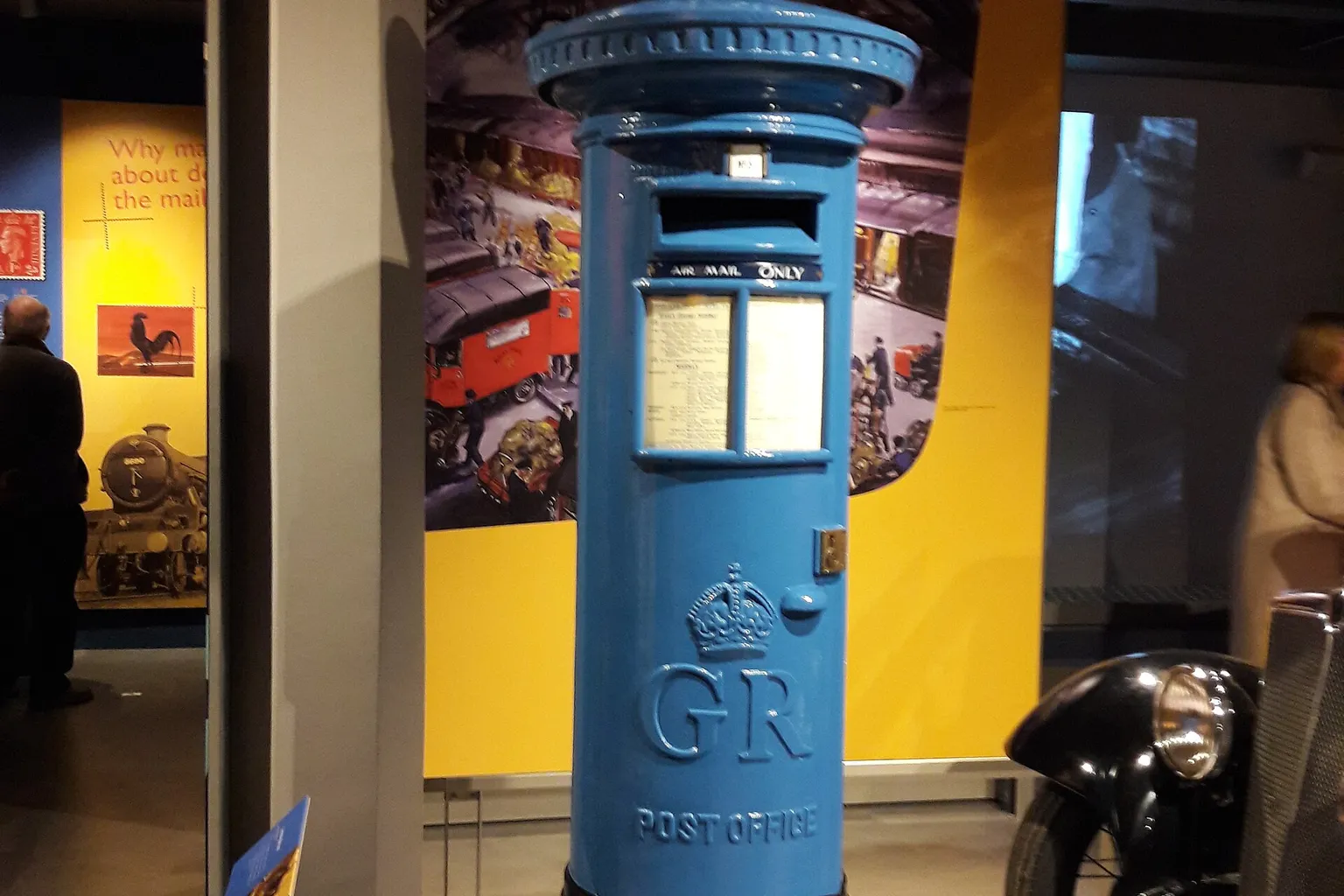
Ticket selection affects what you can access, when you need to arrive, and whether a return visit is included.
Tickets and prices
The Postal Museum
London
01 · GetYourGuide
Entry ticket · Underground rail ride · 1.5 hours
GBP17.97
02 · Official
Official ticket · Standard adult
GBP18
The primary planning error is treating the museum admission ticket and the Mail Rail ride as separate unlimited activities. Standard admission includes general museum access for one year from the first visit and one Mail Rail ride on that initial visit. The annual validity applies to the museum admission. It does not create unlimited access to the underground train.
The Postal Museum tickets: what the standard admission covers
A standard ticket is structured as an annual admission rather than a single-use museum entry. From the date of the first visit, it allows unlimited general admission for one year. This is useful for London residents, repeat visitors, and anyone combining the museum with other Clerkenwell or King’s Cross activities over several days.
The ticket also includes one ride on Mail Rail during the first visit. That distinction controls the route:
1. Book or select the standard museum admission.
2. Arrive within the operating window.
3. Complete the Mail Rail ride on the first visit.
4. Use the same admission entitlement for later general museum visits during the following year.
5. Do not assume that later visits include another train ride.
If the underground ride is the main reason for visiting, schedule it as a fixed component rather than treating it as an optional add-on after the galleries. Mail Rail departures stop before the museum itself closes. The last train departs at 16:00, while regular museum opening continues until 17:00.
That one-hour difference creates a predictable failure point. Visitors who arrive late may still have time to view the collection but miss the included ride. A ticket that remains valid for a year does not correct a missed first-visit ride.
The annual admission is flexible. The Mail Rail ride is not. Treat the train departure as the hard constraint.
Booking Postal Museum tickets online
Online booking is the most controlled way to plan the visit, particularly when the underground ride is a priority or the group includes children. Current ticket availability and live prices can change, so use the booking interface for the operational detail rather than relying on a static figure in a guide.
Check the following before completing the transaction:
- The selected date and arrival window.
- Whether the booking includes general museum admission and the Mail Rail ride.
- The age category applied to each child.
- Whether a concession or access ticket is available for the visitor’s circumstances.
- Whether the booking concerns standard admission or the separate Sorted! Play Space.
- Any restrictions attached to special tours, temporary events, or additional experiences.
The museum has more than one ticket logic. The standard ticket, the children’s play-space ticket, reduced-access arrangements, and special tours should not be treated as interchangeable products.
Mail Rail: the operational part of the visit
Mail Rail is the museum’s underground train experience through original tunnels beneath the Mount Pleasant sorting office. The ride lasts approximately 15 minutes. It is not a conventional transport service and should be planned as a timed attraction with a defined departure window.
The railway originally opened in 1927 and ceased active mail transport service in 2003. The current visitor experience uses that former postal infrastructure as part of the museum’s interpretation of communications, sorting, and delivery systems.
From a movement and safety perspective, the important variables are simple:
- The train operates underground.
- The ride is enclosed.
- The journey follows original tunnel infrastructure.
- Boarding and departure are controlled by the attraction’s operating schedule.
- The ride is included once with the standard ticket on the first visit.
- Additional rides are not covered by the annual general-admission benefit.
A practical arrival sequence
For a low-risk visit, use this order:
1. Set the external travel buffer. Allow time for walking from the station and locating the correct building.
2. Reach the site before the planned train departure. Do not target the final available train unless there is no alternative.
3. Resolve ticket and access questions before joining the boarding process.
4. Complete Mail Rail early enough to retain time for the galleries.
5. Use the remaining museum time for the exhibits rather than queue management.
The museum is located at 15–20 Phoenix Place, London WC1X 0DA. The site is split between two buildings on opposite sides of Phoenix Place. That layout matters. A visitor who assumes that every function is contained behind one entrance may lose time crossing the street, finding the second building, or redirecting a group.
If you are coordinating the visit for clients, children, or a person who requires additional assistance, establish which building contains the activity you need before arrival. Do not leave this to the final five minutes before a train departure.
Opening hours and the Monday problem
Regular opening hours are Tuesday to Sunday from 10:00 to 17:00. The last Mail Rail train departs at 16:00. The museum is not a seven-day, year-round Monday operation. Monday openings occur primarily during school holidays, so a Monday plan requires direct confirmation.
The annual planned closure period includes 24–26 December. This is a recurring closure window and should be treated as a fixed exclusion when planning a Christmas-period itinerary.
A useful operating model is:
| Planning variable | Practical consequence |
|---|---|
| Regular opening | Tuesday to Sunday, 10:00–17:00 |
| Last Mail Rail departure | 16:00, one hour before general closing |
| Monday visits | Confirm separately; do not assume year-round opening |
| 24–26 December | Planned annual closure |
| Standard admission | General museum access for one year from the first visit |
| Mail Rail entitlement | One included ride on the first visit |
| Sorted! Play Space | Separate ticket and separate 45-minute session |
The museum’s closing time is therefore not the same as the day’s final usable attraction time. If Mail Rail is a required component, use 16:00 as the effective cutoff and arrive well before it.
Ticket categories: adults, children, access, and play sessions
The published ticket structure separates visitors by age and access requirements. Adults and children use different admission categories. Children under two enter without a standard admission charge. A reduced-access ticket with a companion option is also available within the published structure.
Do not infer that a concession or companion arrangement automatically covers every person in a group. Enter each visitor under the correct category and review the conditions shown during booking. The ticketing system is the controlling source for current eligibility and price.
Sorted! Play Space is a separate booking
Sorted! is a dedicated play area for children aged 1–8. It requires a separate ticket from general museum admission and operates in a 45-minute session. An adult ticket is also required for the play-space visit.
This creates two separate planning decisions:
- Will the child visit the general museum and Mail Rail?
- Will the child also use the Sorted! Play Space?
A standard museum ticket does not include the play session. Booking museum entry without booking Sorted! does not guarantee access to the play area. Conversely, booking a play session does not replace the need for general museum admission if the group intends to visit the wider museum and ride Mail Rail.
For families, the correct sequence is to align the play-space session with the museum route rather than booking it in isolation. A 45-minute session can become a constraint if it overlaps with the Mail Rail departure or if the group must cross Phoenix Place between activities.
Children and movement control
The museum combines exhibits with an underground train experience and a dedicated children’s play area. These are different environments with different movement demands. A child who is comfortable in the play space may not respond the same way to a controlled train boarding process or an enclosed tunnel journey.
Use a basic risk assessment:
- If the child is under two: confirm the admission requirement and whether the planned activities impose separate conditions.
- If the child is aged 1–8 and wants Sorted!: reserve the separate 45-minute session.
- If the child is using the general admission ticket: retain enough time for Mail Rail before the final departure.
- If the group is changing buildings: add a transition buffer rather than scheduling consecutive activities with no movement time.
- If the child has sensory or mobility requirements: contact the museum before booking if the online ticket information does not answer the specific question.
This is not over-planning. It is load distribution across the day. The group has a fixed number of transitions, and each transition adds queue, navigation, and supervision demand.
Location and transport from London stations
The nearest London Underground and National Rail stations are Farringdon, Russell Square, Chancery Lane, and King’s Cross St Pancras. Each is under one mile from the museum. The most efficient station depends on the rest of the itinerary, not only on the nominal distance.
Farringdon is a practical reference point for visitors approaching from central and east London connections. King’s Cross St Pancras is relevant for rail passengers and visitors combining the museum with the wider King’s Cross area. Russell Square and Chancery Lane may be preferable depending on the route and walking conditions.
The final approach should be treated as a walking segment, not as a station-to-door transfer. The museum address covers a site on both sides of Phoenix Place. If you are responsible for another person, a child, or a service animal, avoid compressing the station transfer into the ticketed activity window.
A functional route plan has three parts:
1. Station exit selection. Confirm the correct exit before beginning the walk.
2. Street-level navigation. Allow for crossings and the two-building layout at Phoenix Place.
3. Entry verification. Confirm whether the next activity begins in the building you have reached.
This is especially relevant for professional pet caregivers advising clients. If a client is combining a museum visit with a dog-walking or pet-sitting schedule, the attraction should be treated as a fixed-duration block with travel and handover time added separately. The Mail Rail departure is a hard endpoint. A delayed return to the pet’s care location can create a welfare problem even when the museum visit itself is proceeding normally.
Accessibility and service animals
The available facts establish that the museum offers a reduced-access ticket with a companion option. They do not establish the complete access specification for every area, the exact boarding method for Mail Rail, or the current policy for service animals. Those details should be confirmed directly before booking if they affect the visit.
The phrase “service dog access” is not a sufficient operational plan. A responsible plan identifies the specific activity:
- General museum admission.
- Mail Rail boarding and the underground journey.
- Movement between the two buildings.
- Queuing and waiting areas.
- Toileting and relief arrangements outside the attraction.
- Any separate Sorted! Play Space access.
- Emergency procedures or evacuation constraints.
For visitors using a trained service animal, ask the museum whether the animal can accompany the visitor through each planned part of the route, including Mail Rail. Do not assume that access to the gallery floor answers the question for the train. The underground ride has different physical conditions, and the attraction may apply activity-specific procedures.
Environmental and kinetic factors
A service animal may encounter several distinct load conditions during the visit:
- Walking from a station for up to roughly a mile.
- Waiting in a queue or controlled boarding area.
- Entering and exiting a train carriage.
- Maintaining balance during vehicle movement.
- Operating in an enclosed underground environment.
- Crossing between buildings on an urban street.
- Managing heat exposure or cold exposure during the outdoor segments.
These conditions affect gait, thermal regulation, and recovery time. A dog that appears stable during a short gallery walk may show fatigue after a station transfer, a queue, and a train ride. The correct control is not to guess. Confirm the route and provide a realistic rest interval.
For professional caregivers, the handover record should include:
- Last feeding and water time.
- Last relief break.
- Expected time away from the animal.
- Whether the animal is a working service animal or a pet remaining with the caregiver.
- Any noise, enclosure, or mobility triggers.
- Contact instructions if the itinerary changes.
The museum is an attraction. It is not a substitute for a pet-care plan.
Service-animal access is a route question, not a label. Confirm every activity that changes the animal’s environment.
How long should the visit take?
The fixed Mail Rail journey lasts 15 minutes, but the total visit is longer. The duration depends on the museum galleries, queue conditions, building transitions, child activities, and transport time from the station.
A compressed visit can work if the objective is the train and a focused museum circuit. It becomes less reliable when the group also includes a Sorted! session, a child with a slower gait, or a visitor requiring access support.
Use three planning bands:
Focused visit
A focused visit prioritizes Mail Rail and selected museum exhibits. It requires early arrival and minimal unplanned movement. This is the most vulnerable plan if the train departure is missed.
Standard visit
A standard visit includes the train and enough time to move through the principal museum areas without forcing every exhibit into the schedule. This is the most stable option for first-time visitors.
Extended or repeat visit
The annual admission makes repeat general visits practical. A later visit can focus on exhibits that were skipped initially, without requiring the same pressure to complete everything on one day. The Mail Rail entitlement does not reset with each general museum visit.
The best duration is therefore not determined by the ride length. It is determined by the number of transitions and the degree of schedule control required.
A direct troubleshooting tree for common booking failures
The online availability does not match your preferred date
First, check whether the date is a Monday or falls within a planned closure period. Monday opening is not guaranteed throughout the year. Next, confirm whether you are viewing standard museum admission, a play-space session, or a special event.
If the date remains unavailable, do not substitute a different ticket type without checking what it includes. A play-space booking is not a replacement for museum admission. A museum admission booking may not provide the session time you need for Sorted!.
You arrive after the Mail Rail departure window
The standard ticket may still provide museum access according to its terms, but the included ride is tied to the first visit. Do not assume that staff can move the ride to a later date or convert it into unlimited access. Ask on site, but plan on the published entitlement being applied as written.
The preventive measure is a time buffer. Treat 16:00 as the final operating point, not as the target arrival time.
You want to return after the first visit
Use the annual general-admission validity. The standard ticket provides unlimited museum admission for one year from the date of the first visit. The Mail Rail ride remains a first-visit entitlement unless an additional option is purchased under the current ticket conditions.
You are visiting with a young child
Separate the general museum plan from the Sorted! plan. Confirm the child’s age category, book the play space separately if required, and prevent the 45-minute session from colliding with the Mail Rail schedule.
You are visiting with a service animal
Confirm access for the museum, the train, and the route between buildings. Ask about current procedures before arrival. Do not rely on a general assumption that a policy applying to the museum galleries automatically applies to an underground ride.
Final safety parameters for the visit
Use this control list before leaving for The Postal Museum:
- Confirm the current ticket category for every visitor.
- Verify whether the booking includes the Mail Rail ride.
- Treat the included Mail Rail ride as valid on the first visit only.
- Plan to arrive well before the 16:00 final train departure.
- Check Monday opening separately.
- Exclude 24–26 December from the itinerary unless the museum publishes a change.
- Map the two buildings on opposite sides of Phoenix Place.
- Book Sorted! separately if a child aged 1–8 will use the play area.
- Allow a 45-minute block for the Sorted! session.
- Add station-to-museum walking time to the attraction schedule.
- Confirm service-animal access for each activity, not only general admission.
- Record feeding, water, relief, and handover times if the visit is part of a pet-care itinerary.
- Use the current booking interface for prices and availability.
The Postal Museum tickets are straightforward once the entitlements are separated. General admission functions as a one-year pass. Mail Rail functions as a single first-visit ride. Sorted! functions as a separate timed session. The site functions as two buildings with an underground attraction operating on a shorter schedule than the museum.
Plan around those constraints and the visit is predictable. Ignore them and the failure points are equally predictable: a missed train, an unused play-space booking, a building crossed at the wrong time, or an access question discovered at the entrance.
Practical info
Currency: GBP
Driving: on the left
Emergency number: 112
FAQ
Does my annual museum ticket include unlimited rides on the Mail Rail?
What happens if I arrive at the museum after 16:00?
Is the Sorted! Play Space included with my general admission ticket?
Are the museum and the Mail Rail located in the same building?
Is the museum open on Mondays?
Photo: Gaius Cornelius / CC BY-SA 4.0 — Wikimedia Commons