These are the most pet-friendly luxury hotels in North America
According to Quartz, a new report identifies North America’s most pet-friendly luxury hotels.
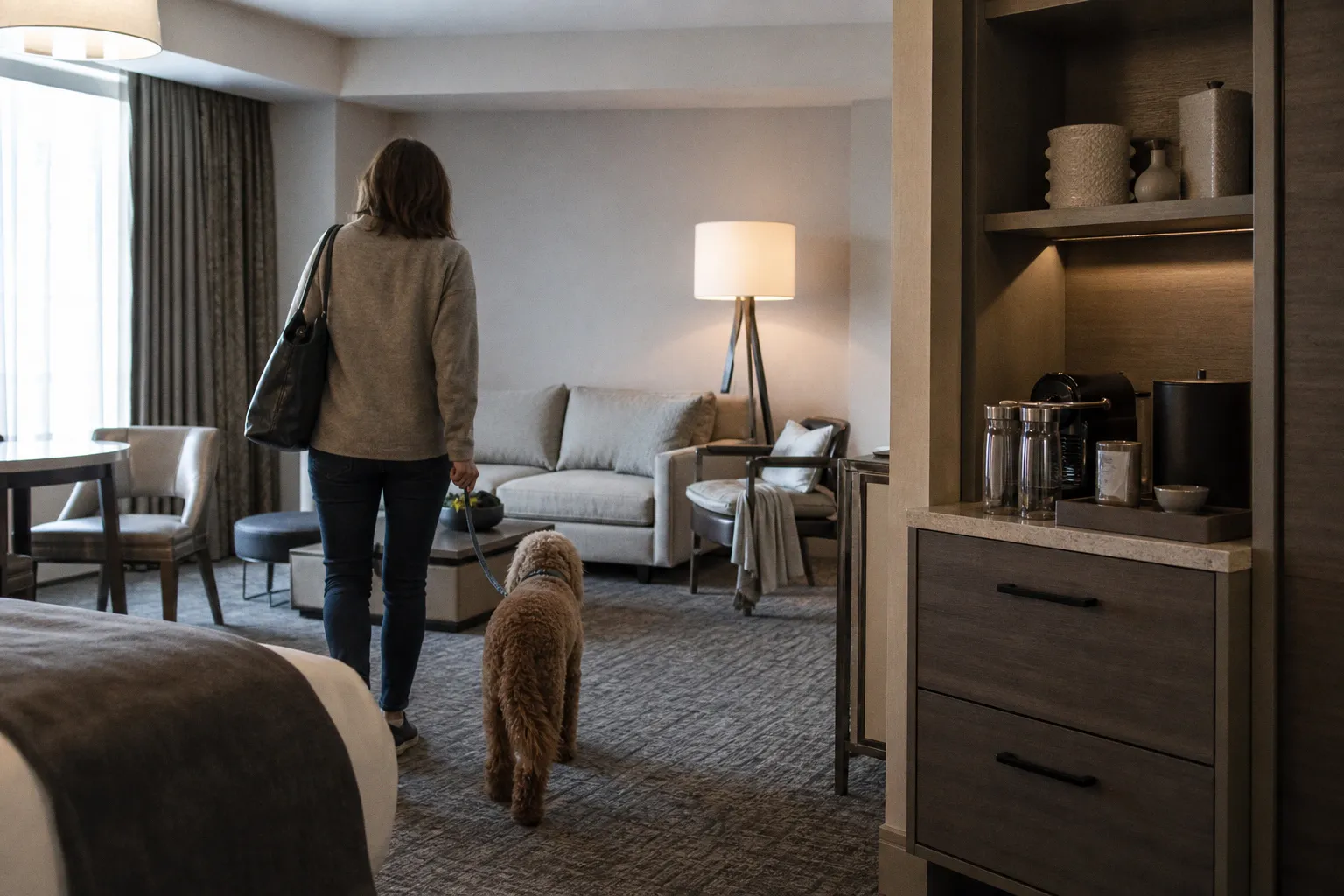
The useful operational takeaway is narrower than the headline: “pet-friendly” is not a standardized service level, and a luxury booking does not confirm that a dog can be accommodated safely, legally, or without disruption to its routine.
The American Kennel Club separately stresses that pet fees, size restrictions, and property rules can vary even within the same hotel brand. For a dog walker or pet sitter coordinating travel care, the property-level policy—not the brand label—is the controlling document.
A luxury designation is not a handling protocol
A hotel may accept dogs while imposing restrictions that materially change the stay:
- limited pet-friendly room inventory;
- nightly fees or deposits;
- caps on the number of pets;
- weight, size, or breed restrictions;
- leash and carrier requirements outside the room;
- designated relief areas;
- rules on pets in shared spaces;
- restrictions on leaving a dog unattended.
These variables affect the walking plan. A distant or restricted relief area adds travel distance and handling time to every elimination break. A rule against unattended dogs may require continuous human coverage rather than a standard drop-in visit. A pet-friendly room on a high floor may also alter the route, elevator exposure, and timing needed for a reactive, mobility-limited, or young dog.
Do not infer the usable walking environment from a hotel’s pet marketing. Confirm it.
Pre-booking verification: use the property, not the chain
The AKC notes that many hotel brands welcome dogs, but policies differ by location. That is the correct decision point.
Before a reservation is finalized, obtain answers from the specific property:
1. Room status: Is a pet-friendly room available for the dates requested?
2. Dog limits: What limits apply to number of dogs, size, weight, or other requirements?
3. Unattended status: Can the dog remain in the room without a handler? If yes, under what conditions?
4. Movement rules: Is a leash or carrier required in corridors, elevators, lobbies, and outdoor areas?
5. Relief route: Where is the designated walking or relief area, and are there access restrictions?
6. Access zones: Which hotel areas permit dogs and which do not?
7. Financial exposure: What fees, deposits, or cleaning charges apply?
8. Local coverage: Can an outside professional walker or sitter enter the building and reach the room?
Record the answers in the care brief. Verbal assumptions create avoidable handoff failures.
Build the travel-care plan around routine
The AKC recommends maintaining the dog’s normal feeding routine and bringing familiar items. That principle applies directly to walking and sitting coverage. The goal is stable handling inputs: familiar equipment, predictable feeding, known cues, and scheduled outdoor breaks.
For the sitter or walker, the minimum handoff file should include:
- reservation and room information;
- hotel pet-policy confirmation;
- dog identification and current contact details;
- leash, harness, carrier, and access instructions;
- the approved walking and relief route;
- feeding schedule and permitted items;
- behavior notes for elevators, strangers, other dogs, and unfamiliar indoor surfaces;
- a clear escalation contact.
Final check: confirm the room, confirm the rules, inspect the walk route, and do not leave the dog unattended unless the property explicitly permits it. “Pet-friendly” is a starting label. Safe care depends on the constraints behind it.