How to Evaluate Professional Dog Walkers: Lessons from NYC Experts
Vogue's recent Dogue series installment profiles six New York City dog walkers, set against the city's estimated 600,000 dogs.
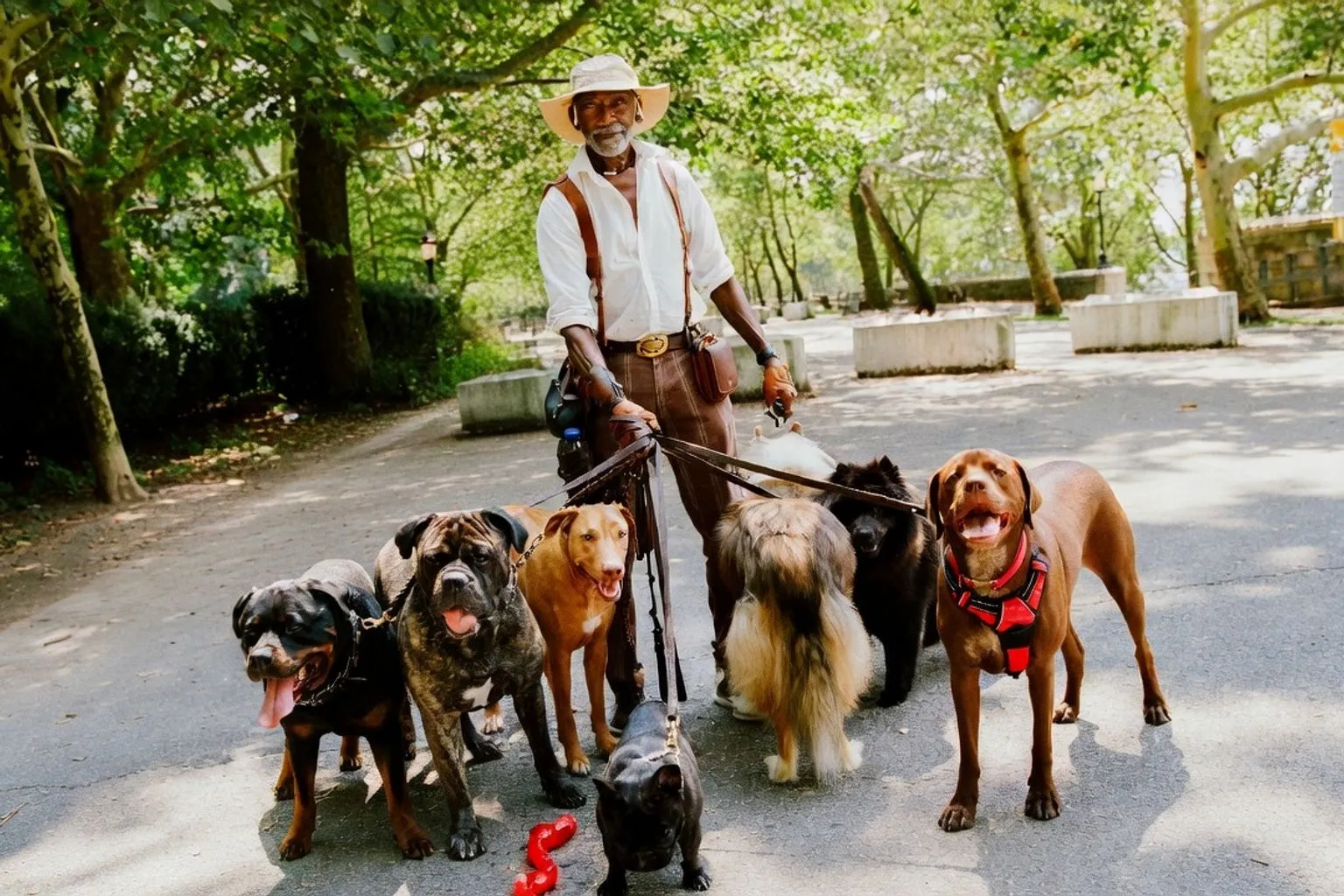
The Leaders of the Pack: Meet Six New York Dog Walkers
For readers evaluating a professional walker, the piece offers operational reference points on behavioral reading, gear standards, and pack-scale control in dense urban terrain. The profiles cover operators across multiple Manhattan neighborhoods, including at least one who has been walking dogs on the Upper West Side since the early 1980s.
Reading the Dog Before the Leash Moves
The Vogue piece documents that the profiled walkers diagnose a dog's state from micro-signals—a tug of the leash, a twitch, a shift in ear position—before any overt behavior occurs. This is the core competency to observe during a trial walk. Ask a prospective walker to describe how they distinguish arousal from aggression, and how they preempt a leash incident before correction becomes necessary. A handler who cannot articulate the difference in operational terms is working on instinct, not protocol.
The same profile describes handlers outfitting every dog with engraved or burned-in identification on collars and leashes. The biomechanical logic is direct: a collar with permanent ID reduces lost-dog recovery time and eliminates the failure mode of a detached or corroded metal tag. Leather distributes load across the neck more evenly than thin nylon ribbon during a sudden pull, at the cost of requiring inspection for cracking at the buckle interface.
Pack Limits and Kinetic Load
Several profiled walkers handle six or more dogs simultaneously. At that scale, the handler's kinetic chain—not the dogs'—is the limiting factor. The combined directional force of the pack requires shortened stride, active core bracing, and intentional weight offset. Position determines load for the dogs: the lead dog sets pace, the rear dog absorbs braking force, and the middle dogs are subject to opposing pulls from both directions. A working walker maintains sufficient spacing between dogs to keep leads clear and reduce the probability of a redirected bite.
Pre-Hire Verification
- Behavioral literacy: Request a specific description of how arousal versus aggression is read onsite. Vague answers indicate insufficient training.
- ID protocol: Confirm every dog wears a collar with permanent, legible identification. A dangling tag alone is insufficient.
- Pack size: Six is the operational ceiling for most handlers in traffic. Larger packs increase entanglement risk and reduce handler control.
- Route knowledge: Verify awareness of pavement temperature, off-leash risk areas, and construction zones.
- Post-walk communication: Daily written logs on gait, elimination, and behavior signal systematic care.