Rising Financial Pressures Force Owners to Reduce Essential Pet Care Services
A survey of 770 UK dog owners, published in the journal Animals and funded by Battersea, found that 12.4% had already cut spending on their dog's care due to financial pressure, with another 10.8% expecting to do so.
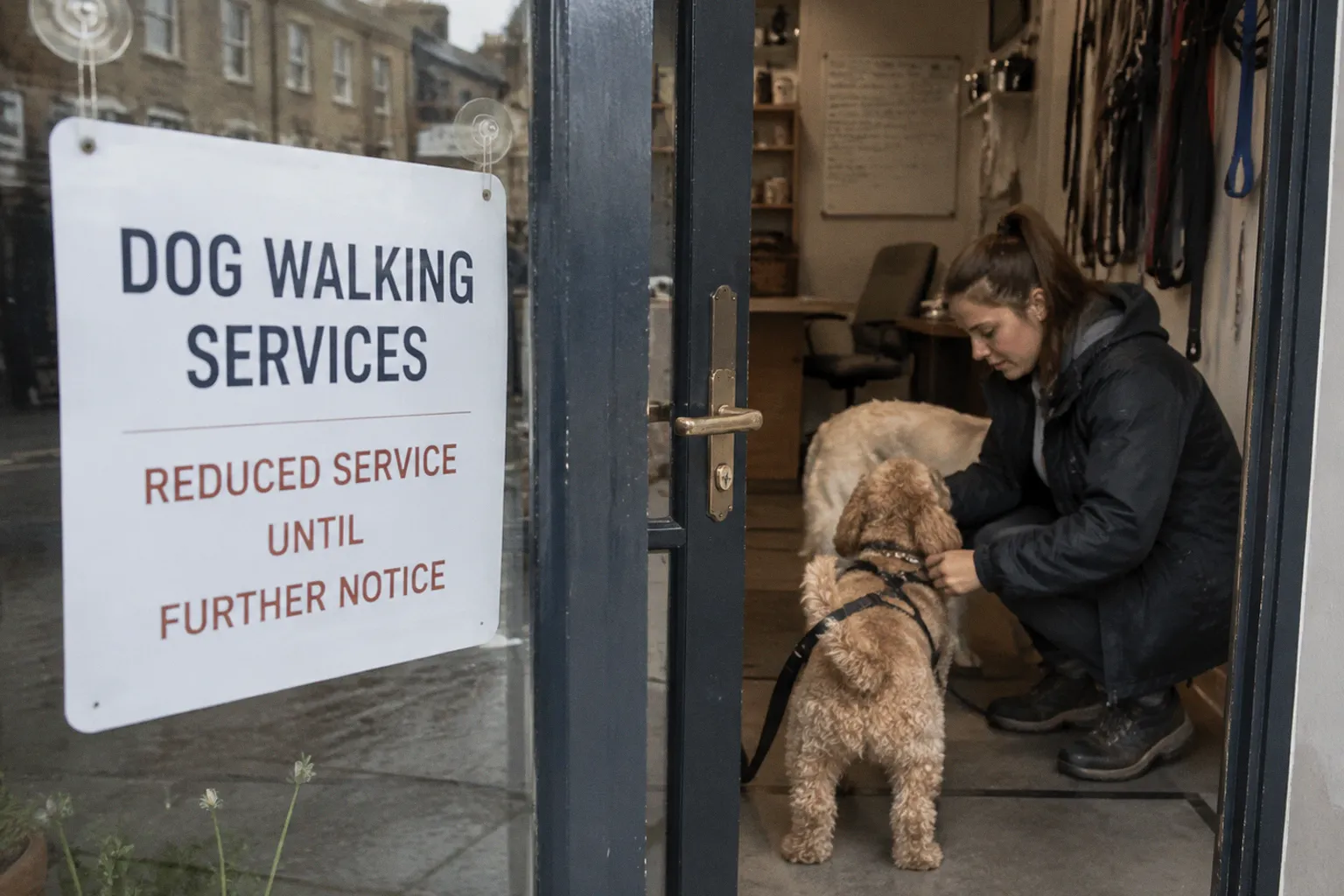
Among owners whose dogs had recent health problems, the cuts run deeper: 14.8% modified veterinary care, 15.7% trimmed walking or daycare, and 21.2% reduced professional training. Researchers warn the true scale is likely larger.
The cost-cutting profile
Data was collected between 2022 and 2024 from owners of pandemic puppies now approaching three years of age. The cohort skews affluent — 71.6% report above-average household income — yet 36% still register cost-of-living pressure on finances.
Reported service reductions:
- Professional training: 21.2%
- Insurance: 16.6%
- Walking or daycare: 15.7%
- Grooming: 15.6%
- Veterinary care modifications: 14.8% — substituting home remedies, delaying appointments, or extending online self-research
The 21.2% training cut carries the highest behavioural weight. Foundational conditioning inputs during early developmental windows shape long-term behavioural stability. Reductions here compound over time.
What the cuts do to the dog
Removing structured walking alters the kinetic chain conditioning that maintains hindlimb proprioception and core stabiliser engagement. Daycare withdrawal removes social load cycling. Training cuts weaken the behavioural feedback loops that prevent escalation.
Rowena Packer, senior lecturer in companion animal behaviour and welfare science at the RVC and the study's senior author, stated that owners are attempting to shield their dogs from financial pressure but there are limits to that absorption, and that the changes may carry important implications for canine health and welfare over the longer term. The study's authors cautioned that the cohort's relative affluence means the figures may substantially underestimate the negative impacts of the cost-of-living crisis on canine welfare in the wider UK population.
Diagnostic latency — the interval between symptom onset and professional veterinary assessment — increases when owners substitute home remedies or extended online research for appointments. That gap compounds.
Simona Zito, Battersea's grants and programmes manager, stated that the research reinforces why access to advice, preventive care, and behavioural support matters, and that the organisation will continue to assess how the wider sector can help owners maintain dog welfare during periods of financial strain.
Operational parameters to monitor
For owners scaling back, monitor these markers before deficits become structural:
- Gait symmetry. Check for unilateral stride shortening, asymmetric sit-to-stand, or load shift off a limb.
- Behavioural baseline. Note any new reactivity threshold, separation distress escalation, or loss of trained response.
- Coat, nail, and ear condition. Matting, overgrowth, and odour signal reduced grooming maintenance.
- Veterinary contact latency. Time from first observed acute symptom to professional consultation. Above two weeks warrants correction.
- Insurance status. Confirm accident-and-illness cover is active before increasing exercise load or substituting care arrangements.