Car Rental in Chania, Greece: A Practical Guide
Finding the right car rental in Chania, Greece, requires choosing between international airport desks and local Cretan agencies.
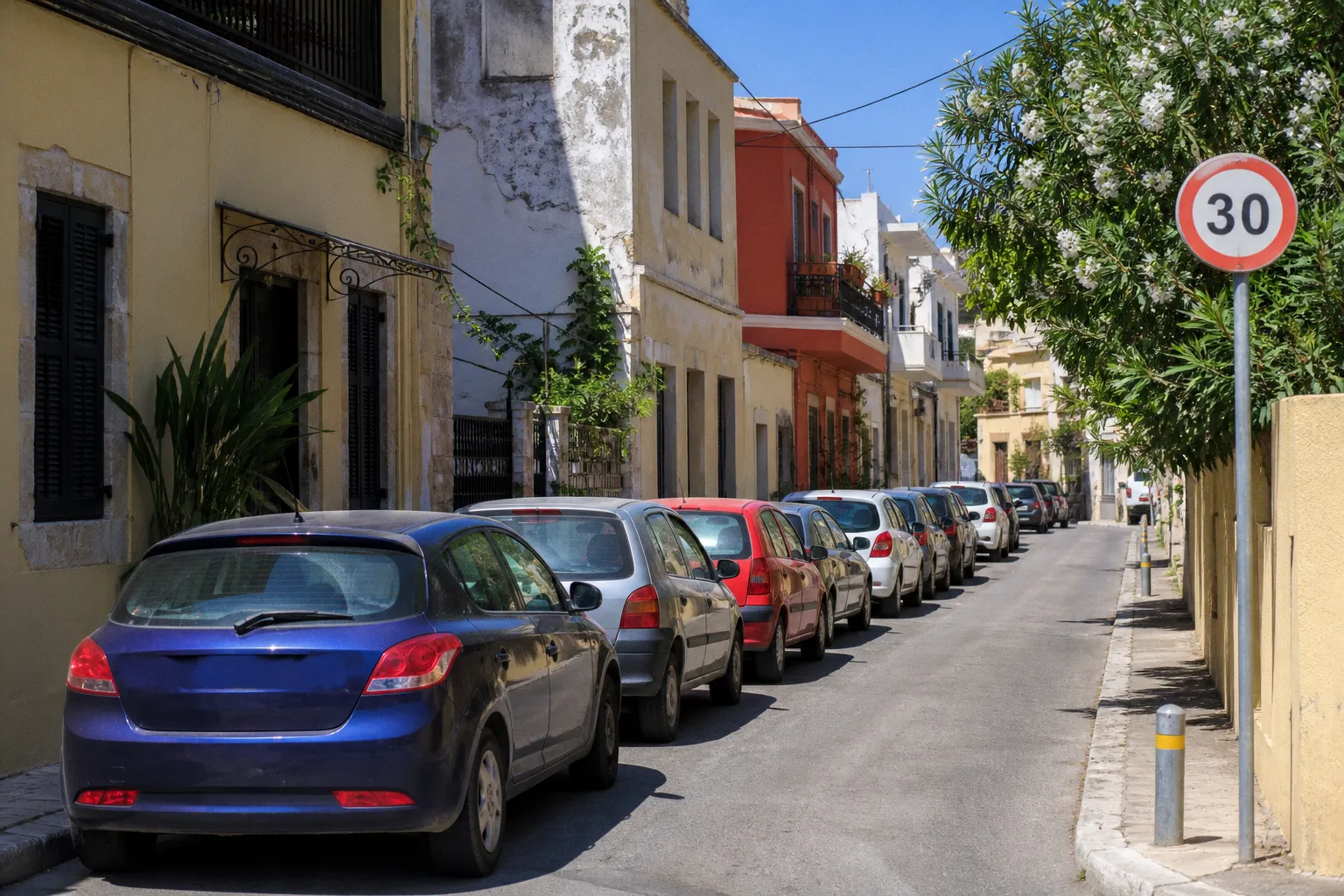
This guide covers essential rules, deposit policies, and driving tips to help you navigate Crete safely.
Compare car rental deals in Chaniá
from $12/day · Prices checked on September 04, 2026
Partner link — Localrent, local rental agenciesGood to know
Driving: on the right.
Local currency: EUR.
Emergency number: 112.
| Legal driving age in Greece | 18 years old |
| Typical rental age requirement | 21 to 23 years old (up to 75) |
| Security deposit range | €0 to €2,500 (depending on provider and cover) |
| Legal blood alcohol limit | 0.05% |
| Highway speed limit | 120 km/h (E65 National Road) |
| UK driving license | Accepted without IDP |
Renting a car in Chania is the most practical way to explore the diverse landscapes of western Crete, from hidden beaches to mountain villages. The local market is divided between major international brands operating mainly at Chania Airport (CHQ) and local Cretan agencies scattered across the city. While global chains usually demand a credit card and hold a substantial security deposit, local providers often offer more flexible terms, including zero-excess insurance packages. Navigating Chania requires awareness of specific local driving habits, parking restrictions around the historic Old Town, and highway etiquette. This guide provides a realistic overview of what to expect when you hire a car, helping you avoid common pitfalls, understand insurance options, and plan your routes across the island.
L'essentiel: Rules, Age Limits, and Parking
Before booking a car hire in Chania, you must understand the local requirements and restrictions. The legal driving age in Greece is 18, but most rental agencies set their minimum age limit at 21 or 23 years, with some applying a maximum age cap of 75. Drivers must have held their license for at least one year. If you hold a UK photocard license, you can drive in Greece for short tourist stays without an International Driving Permit (IDP). However, drivers with non-EU or non-EEA licenses will generally need to present an IDP alongside their national license.
Parking in Chania requires caution. The historic Old Town is pedestrianized, and driving inside this zone is strictly restricted. You must park your vehicle in designated public parking lots or use marked street parking spaces outside the historical center. When driving on Cretan highways, be prepared for a local custom: slower vehicles regularly drive on the paved emergency shoulder to let faster cars pass safely.
Rental Costs and Deposit Policies
Rental costs and deposit requirements in Chania vary significantly depending on the type of provider you choose. International chains, which dominate the airport terminals, typically require a credit card for a security deposit pre-authorization. These excess amounts can reach up to €2,500 depending on the vehicle category.
If you prefer to avoid large credit card holds, several local Cretan car rental agencies offer packages with full insurance (including FDW/CDW and WUG cover) that require zero excess and no credit card or deposit. While we cannot quote universal fuel prices or parking fees due to market fluctuations, choosing the right insurance package is key to managing your budget. Booking in advance is highly recommended, especially for the peak summer season when local fleets sell out quickly.
Where to Pick Up Your Car
The primary hub to rent a car in Chania is Chania International Airport (CHQ), located on the Akrotiri peninsula, about 14 kilometers from the city center. Here, you will find desks for major international rental brands as well as local representatives waiting to meet arrivals.
For those who do not need a vehicle immediately upon arrival, rental offices are also located within Chania city center, close to major hotels and the main bus station. Localrent is among the confirmed platforms operating in Chania, connecting travelers with local fleets. Getting your car in the city center allows you to avoid airport surcharges and only pay for the days you plan to travel outside Chania, saving on parking hassles in town.
Driving Tips and Road Rules in Crete
Driving in Chania and the wider Crete region follows standard Greek traffic laws. Traffic moves on the right side of the road. Speed limits are strictly enforced and are set at 50 km/h in urban areas, 90 km/h on open roads, and up to 120 km/h on major highways, such as the E65 National Road (also known as the Northern Highway).
The legal blood alcohol concentration limit for drivers in Greece is 0.05%, and driving under the influence carries severe penalties. Cretan roads can be narrow, winding, and steep once you leave the main highway, so defensive driving is essential. Watch out for falling rocks in gorges, occasional livestock on mountain roads, and local drivers overtaking unexpectedly.
Where to go by car
| Destination | Distance | Time | Tolls (est.) | Why go |
|---|---|---|---|---|
| Balos Lagoon | ~56 km | ~1 h 30 | — | To see the famous turquoise waters and white sands of one of Crete's most photographed beaches. |
| Elafonisi Beach | ~73 km | ~1 h 45 | — | To experience the unique pink sand beach and shallow lagoon in the southwestern corner of the island. |
| Rethymno | ~60 km | ~1 h | — | To explore the Venetian harbor and well-preserved medieval old town along the northern coast. |
| Theriso Gorge | ~16 km | ~30 min | — | To enjoy a scenic drive through a dramatic narrow gorge leading to a historic mountain village. |
Tolls: motorway estimate (~€0.11/km) — free secondary routes often exist.